Tag Archives: Horror on the Orient Express

The Dreamlands Express I: The Geography of Dreams

Warning: Here be spoilers…

I cannot live up to the enchantment of Christian’s previous post about Poissy but this post is also concerned with coincidence and other odd ways in which a writer’s mind works.

A fragment found folded between the seat and the wall on the Orient Express:

Last night in my compartment of the Orient Express I dreamed of a train so marvelous that in the morning my pillow was wet with tears of joy. It was no creation of iron and steam but of airy palaces borne aloft on the backs of vast beasts. Yet when I woke my heart was sore, for someone on this marvelous train did kill a cat, and in that land this of all things was forbidden.

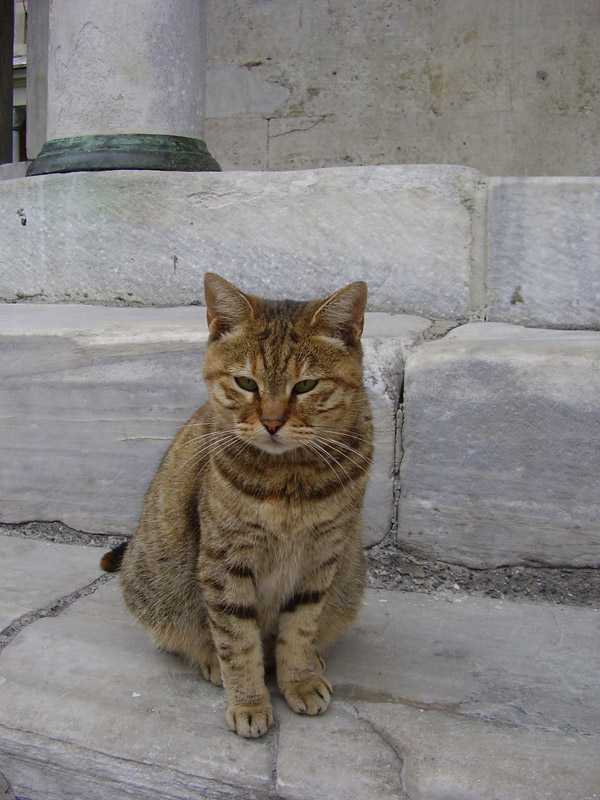
Istanbul Cat 1

This cat has just read the last paragraph and is not impressed.

So somehow a Dreamlands Express has shunted itself onto the back of the Orient Express, no mean feat for a dream world where technology has to be ‘fixed’ for at least 500 years in the waking world before it can exist.

This Express was born out of a discussion with Mark about a key issue with the plot of the Horror on the Orient Express. One particular enemy is simply too strong and can reduce unprepared parties to “one insane investigator, a 12-year old, and an NPC whose player has left to go to College”. Don’t laugh. That’s a near-direct quote.

Was there a way to provide  a weapon against this enemy for weaker parties while allowing stronger parties to tackle it on their own?  That was how the Dreamlands Express evolved, first with a fragment of an idea for the weapon, then an idea for a murder, then an idea for a mystery. Finally the train itself lumbered into view.

I don’t want to talk further about the scenario. I do want to talk about itineraries though. I compiled the train’s route  using the descriptions from an old copy of the H.P. Lovecraft’s Dreamlands supplement and the haunting visions of Lovecraft’s stories. We then had to make some pretty strange decisions about some of these dream cities.

The city of Aira, for instance. It was the dream of the shepherd boy Iranon, in H.P. Lovecraft’s The Quest of Iranon. It was listed in both the text and the map of the early editions of H.P. Lovecraft’s Dreamlands, but has vanished from the latest edition (something we did not actually know until informed by Steff Worthington, resolute map artist). Did Aira actually ever exist, and if it did exist could it be visited?

The city of Zar in country of Zak posed a textual problem: was it the city of Zar in the Country of Zak, or the City of Zak in the country of Zar. Or was it just Zar. Or Zak. Lovecraft is no help as he contents himself with obscure hints; “no dreamer should set foot upon the sloping meadows of Zar, for it is told that he who treads them may nevermore return to his native shore.”

Finally, who or what is the eidolon Lathi that rules over the city of Thalarion? A definition I found spoke of Helen of Troy’s starring role in the Illiad, when ancient historians of Classical Greek world agreed that Helen was never in the city during the Trojan war. By placing her there Homer created an eidolon, a ghost of a woman who never existed in that time or place. How does that help us evoke Thalarion, whose ‘streets are white with the unburied bones of those that have looked upon the eidolon Lathi’? If they’re unlucky, your investigators will find out…

‘The Quest of Iranon’ by H.P. Lovecraft originally appeared in Weird Tales March 1939. [Source: FineBooks Magazine]

3 Comments

Filed under Writing

The Priory, and what lurked within…

Beware, here be spoilers….

The train from Paris has just arrived

The train from Paris has just arrived

You’ve been warned…

You could just have a quick look-around and leave

You could just have a quick look-around and leave

Don’t say you haven’t…
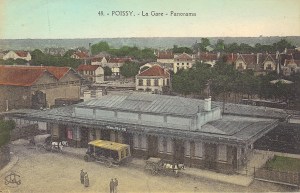
Or take a horse-drawn cart back to Paris

Or take a horse-drawn cart back to Paris

In 1987, as my wife Veronique and I were expecting a baby-girl, Quitterie, Mark Morrison and Penelope Love came to visit us in our small house, West of Paris. Call of Cthulhu aficionados, we had never met before and would not meet again for another twenty-four years, but it was in those few days spent together that the seeds of Horror on The Orient Express were sown.

The history of that campaign is long, dark, and twisted, as it should be, and interested parties who do not care much for their Sanity can roll Library Use at this address on the yog-sothoth.com forum, where I have, over the years, posted, not always alas in chronological order, all the correspondence I have managed to find about the campaign.

In a few words, Mark pitched the idea of an European sourcebook to Lynn Willis at Chaosium, and from this, in increments, the campaign was born. This was long before the Internet, and so ideas and scenarios and corrections had to be faxed or mailed over long distances. In France, my main mission was to contact the Compagnie des Wagons-Lits and obtain permission to make fictional use of the famous train-line.

-Bonjour, this is Docteur Lehmann calling from Poissy. A few fellow-writers and I would like permission to use the name and logo of the Compagnie des Wagons Lits and the Orient-Express for a game of investigations…

-Ah bon?

-Think of it as a new version of Agatha Christie’s “Murder on the Orient-Express”

-Ah, I see. That seems fine. As long as there is no train-wreck in the story. That would reflect badly on the pristine history of the line.

-Oh, no, don’t worry. There are spontaneous combustions, beheadings, losses of life and limb, people driven mad salivating in the dark recesses of Charenton Asylum where they fall prey to the perverse nocturnal habits of members of the staff, but, on my doctor’s honor, NO TRAIN WRECK

-Guess that’s OK, then. Good day, Docteur.

As it happens, one of my wife’s ancestors had crafted wood-work in the fine furniture on the Orient Express…The train took on many other writers, and in the end I was left standing on the platform in Paris “having been delayed at Charenton Asylum” as Mark put it  😉

My second novel was being filmed as the deadline for my scenario approached, and there was no way I could deliver on time. So mixing my ideas and script with great input from Richard Watts, Geoff Gillan and Nick Hagger, the Paris and Poissy chapters were crafted, and when I received the finished product, I had the surprise of discovering that in a very touching and slightly unnerving gesture, Mark and his brethren from down under had incorporated our small family into the arc of the story. ( Previewing this chapter, Mark tells me something I never knew: it was Nick Hagger, whom I’d never met but who had inherited my notes and knew why I was unable to write the story, who used Mark’s memories of us to include the Lorien family into the Poissy chapter)

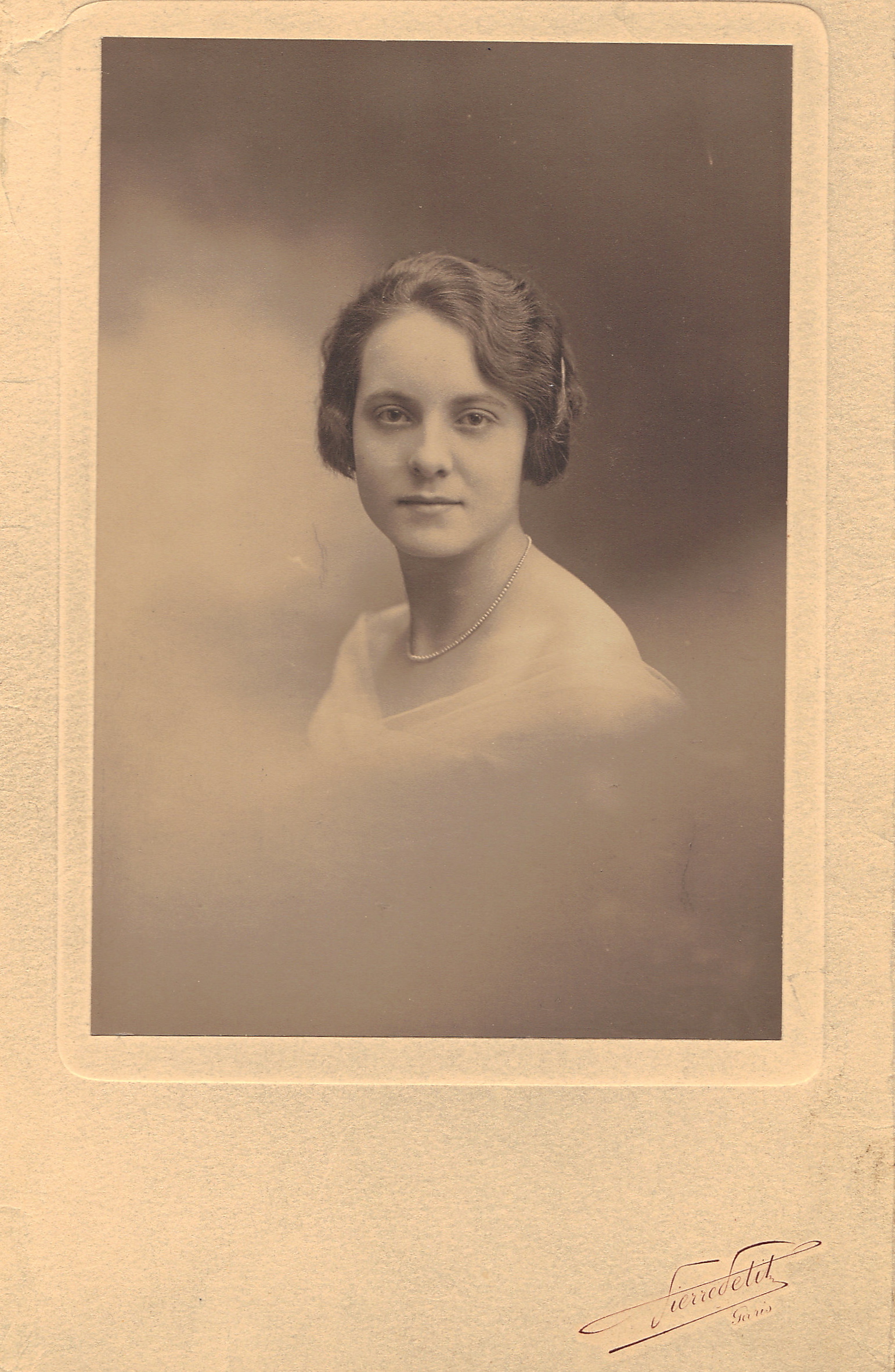
Madame Veronique Lorien

Madame Veronique Lorien

Years later, when the Kickstarter for “HOTOE reloaded” succeeded in such amazing fashion, I told Mark I was ready to go back over those chapters in France and enhance them a little if I could. Part of the chase for a mysterious artefact brings investigators to Paris and then onto Poissy, a smallish historical city 30 kms West of the capital, in which I have worked as a general practitioner for thirty years.

Just before the French Revolution, a great evil lurked in the town

Just before the French Revolution, a great evil lurked in the town

Mark and Richard and I had crafted a tale for the loss of this artifact around the time of the French Revolution, but I had glossed over details at the time.

What evil lurks in the heart of Poissy? The gargoyle knows

What evil lurks in the heart of Poissy? The gargoyle knows

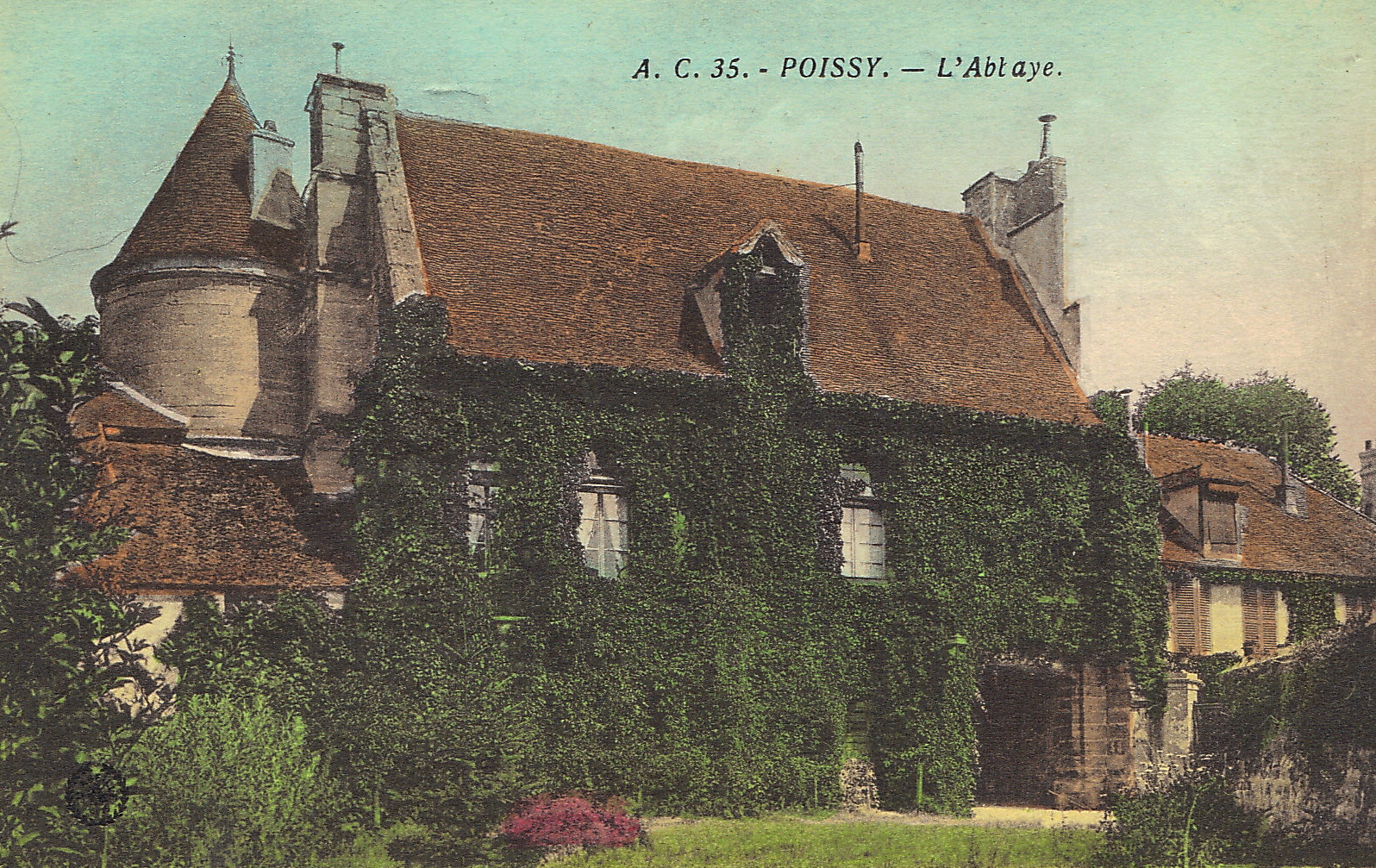
Now I was going back over terrain that was so familiar I did not usually give it a second glance, and things began to get strange. Very strange. I searched for old photographs, old postcards, to get an accurate picture of the town around 1923 at the time of the campaign. An elderly woman patient who had lived all her life in Poissy lent me her personal collection of photos, reminisced, and a whole sector of town, the forgotten and hidden “Enclos de l’Abbaye”, a recluse priory in the center of town next to a great wooded park, came to life for me. As in any good CoC campaign, I then contacted the Cercle d’Etudes Historiques et Archéologiques de Poissy, where kindly protectors of the past let me peruse old documents, old maps, some of which I scanned for the new edition.

I had passed the Enclos de l'Abbaye for years without going through that porch

I had passed the Enclos de l’Abbaye for years without going through that porch

I work on what was in 1923 the Place de la Gare, and as train-stations, arrivals, etc… are a big part of such a campaign, I looked specifically for photographs of the time, and paid close attention to the remaining buildings around, with their beautiful old stone-masonry. The day after that, a block of masonry as big as a small suitcase cracked and fell on the pavement just in front of my office.
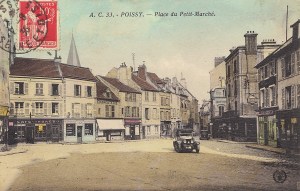
Place de la Gare, circa 1923

Place de la Gare, circa 1923

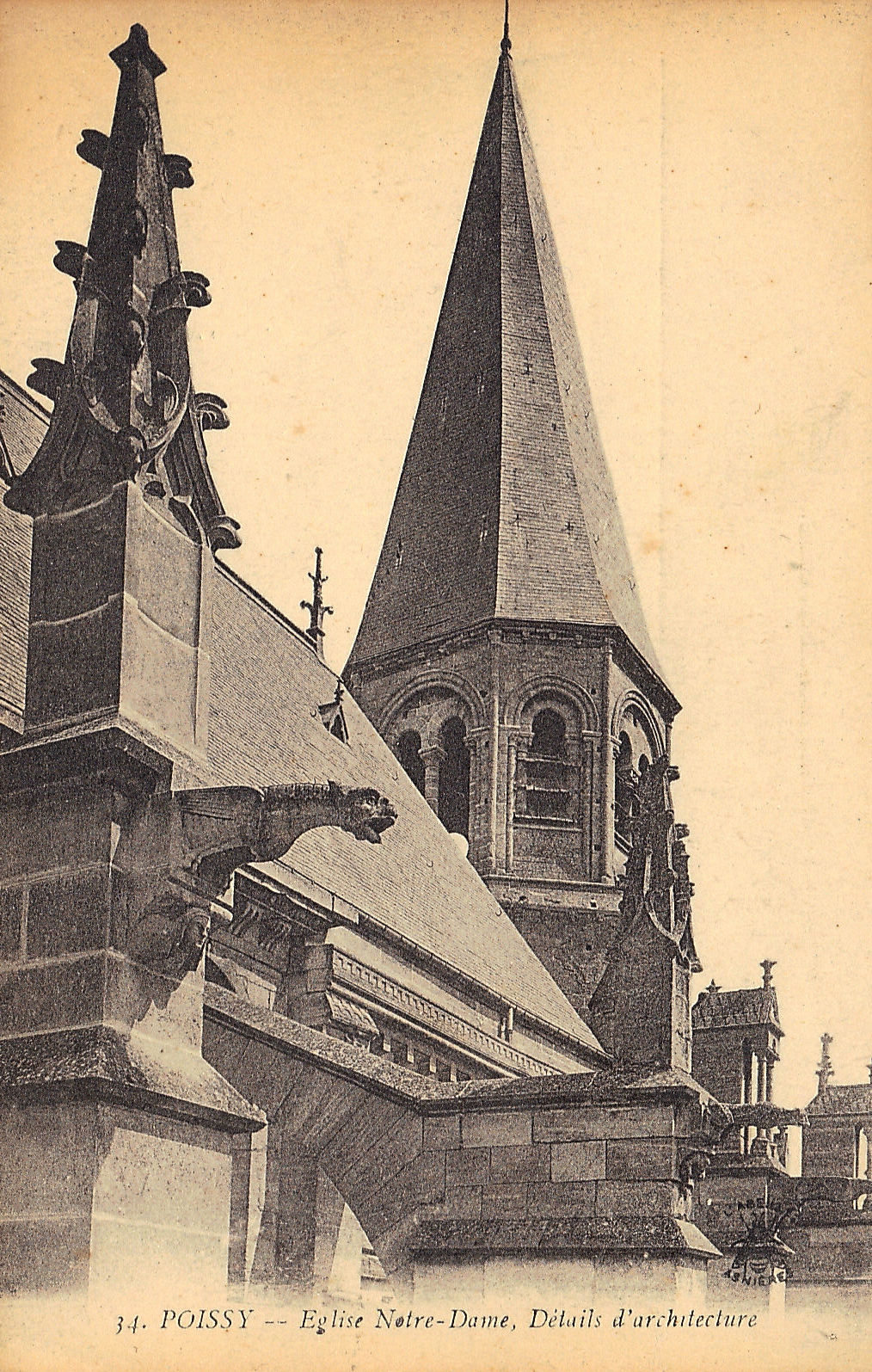
Poissy is the birthplace of King Louis IX of France, Saint-Louis as he is better known, ( and this being Europe, my wife’s family can trace their ancestry up to the King…) In the church where we married I found his baptismal font, as well as strange and gruesome hints about his death during a Crusade and the way his body was disposed off, gruesome hints with obvious links to the central theme of the campaign.
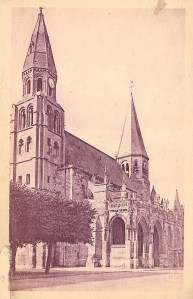
The Church: Collégiale Notre Dame de Poissy

The Church: Collégiale Notre Dame de Poissy

And looking around the enclosure of the Abbaye, I walked up cobbled paths between old houses, relics, stone fragments, searching for the site of the Historical Society, and trying to pick a suitable address for the house of Dr Lorien and his wife. I knew from the original campaign what the house should look like from the outside, and one house picked my fancy, in the old photographs from the turn of the century as well as in real-life, as it hadn’t changed much.

The house I chose for Docteur Lorien and his family

The house I chose for Docteur Lorien and his family

Looking through the documents in the vaults of the Historical Society, I found photographs of passageways and hidden doors deep under the basements of the houses, and learned that most of the inhabitants of the Abbaye had been Protestants and must have used these passages from house to house as safeguards in case religious mistrust flared again.
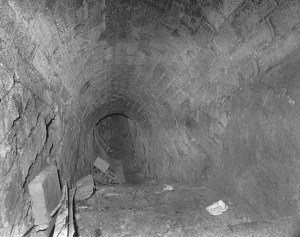
The passage

The passage

Some of these passages looked uncannily like those Nick had invented all those years ago…
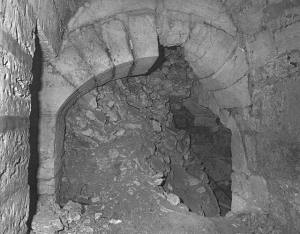
Forgotten for centuries...

Forgotten for centuries…

I wanted to tell my friends of this weird example of serendipity, when, turning a page, I found a photograph of what I had chosen as the Lorien’s house. And there, scrawled in the left hand corner or the photograph, were clearly legible these few words: “La maison du docteur”. “The doctor’s house”. I fled, screaming, the way one does when confronted with the malevolence of a twisted, uncaring universe.

Unnamed general practitioner of erstwhile good repute- Charenton Asylum-1923

Unnamed general practitioner of erstwhile good repute- Charenton Asylum-1923

Christian Lehmann

PS: Serendipity means a “happy accident” or “pleasant surprise”; specifically, the accident of finding something good or useful while not specifically searching for it.
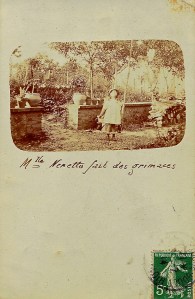
Quitterie Lorien, a playful child, quickly forgot that night, and the "thing in the window"

Quitterie Lorien, a playful child, quickly forgot that night, and the “thing in the window”

PPS: The photograph of Veronique Lorien is an actual photograph of my wife’s  grand-mother circa 1923. The photograph of the playful child grimacing in the garden is also a family heirloom, an Instagram photograph of the 1920’s, I guess. The child’s father must have made the photo and used it as a postcard sent to friends.

4 Comments

Filed under Guests

Secrets of play testing

Dark Ages play test

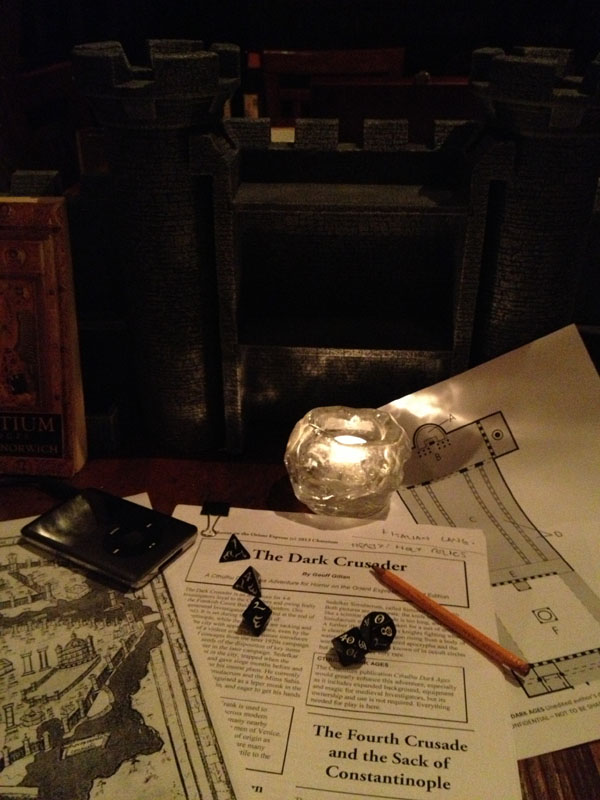
Behind the medieval Keeper’s Screen for the Cthulhu Dark Ages play test, set in Constantinople 1204

Last night we played “The Dark Crusader” by Geoff Gillan, the brand new Cthulhu Dark Ages scenario for Horror on the Orient Express. It was an interesting group, as only one of our regular 1920s group play testers could make it. Of the others, one knew of the 1991 campaign from years ago, one had read it recently, one knew nothing at all, and one was Penny… who we can say knows more than a bit (although nothing about “The Dark Crusader”).

It worked really well; Geoff has outdone himself. The clues and drama moved the players seamlessly from one location to the next, the backdrop of the Fourth Crusade was rife with tragedy and horror, and there were some scenes that were creeping me out, and I was the one running it. The players praised it at the end, particularly the regular play tester, who thought it blended really well with the larger story. I timed the play test so that it ran the Saturday after the 1920s group found the illuminated 13th century manuscript in the Wednesday game.

The historical scenarios are not dreams nor past lives nor out of body experiences; they are in effect playable player handouts, with pre-generated characters. In this case the characters were mostly created by Geoff’s original play testers (including Cthulhu Reborn meister Dean), and the personalities were great. I was not so convinced by their skill chances, so I’ll be increasing some of those so that each player can shine when his or her character’s specialty is called upon.

I have not run Cthulhu Dark Ages before, and to be frank (actually, the players were Franks – oh stop, I’m killing me – Frankish knights, geddit? – I’ll be here all week, try the chicken) I found that combat ran a little slow. Armour is good at soaking medieval amounts of damage (who knew?) so even the simplest battle encounter slowed the game down for me. In the edits, I’ll add suggestions for Keepers as to what the key is for winning each fight, so that players do not need to kill everything in all scenes. I’ve co-opted this from the “out” suggested for Dungeons & Dragons 4th edition fights, from work by Michael Shea and others. (And yes, that is indeed a D&D screen in the photo above; it seemed like the right choice for an adventure set during a medieval siege. It’s the most ridiculous RPG accessory I own, but in my defence I got it on special from a store which was closing down where I had $100 credit to burn. Don’t judge me.)

Backing up to the point above: our Orient Express play test games are not proper RPG sessions. We simply don’t have time, as we need to knock over a city a night. Hence my impatience with combat length. This ticking clock applies to all scenes. I’ve asked the players to focus their roleplaying on the plot at hand, and not to introduce sub-plots and dynamics from their own characters. I also don’t have time for the usual to and fro around the table where the players decide what to do; you know how it goes, an issue comes up with a few different approaches, no-one agrees, the discussion starts going around and around with plenty of repetition but no resolution in what Danny Bilson once called “a cycle of failure”. And there’s me, watching the clock, thinking If they just decided on something we could all see what happens, instead of sitting here deciding what won’t.

Hence the decision totem.

This is a pretty cool artifact; in 1989 I wrote a tournament module called Persons Unknown set in 1980s Scotland about a group of amnesiacs in an asylum. Marion Anderson had a tremendously cool idea for our trophies: she made an Elder Sign brand, and burned the image into our wooden book trophies. There was a spare left over, and Marion was kind enough to give it to me. It’s been a keepsake all these years, and now it’s a prop.

It sits on the table in front of one player. So, when the players are in a cycle of failure, I quickly summarise the options they have proposed, look at the person with the decision totem and say “Choose”. He chooses, then moves the totem widdershins around the table to the next player, and the game moves on.

Call of Cthulhu trophy, made by Marion Anderson for Arcanacon VII (Melbourne, 1989)

Call of Cthulhu trophy with Elder Sign brand, made by Marion Anderson for Arcanacon VII (Melbourne, 1989)

Our play testers are tainted, in any event. Not morally, but they know they are play testing Horror on the Orient Express, so they are the most diligent, focused, fantastic set of players you could ask for; they take their job seriously, so they are very attentive to all clues. I wish you the same luck with whoever you run the campaign for (Rule One: No smartphones in the 1920s), but suggest you contract with them before you start. If everyone pays attention, stays in character and takes the game seriously, it is better by a margin of strange aeons.

It’s a heady brew: the combination of such great players, such detailed material, the worldwide support of gamer investors and the thrill of an engaging and deep creative project. This is turning out to be one of the best campaigns I’ve ever run. I hope it is the same for you.

Oh, and a postscript: While my players in Melbourne Australia were in Constantinople 1204, at that exact hour on the other side of the planet, Oscar Rios’s players in New York were in Vinkovci 1923. Two Keepers, two groups, two cities, two Cthulhu eras, but the same campaign. That felt good.

vinkovci009

Vinkovci train station. [Source: StareSlike.com]

1 Comment

Filed under Playtesting

Attenzione! Cthulhu

When I asked Pookie to update the list of English-language European Call of Cthulhu scenarios  for the “Continent of Horrors” essay in Horror on the Orient Express, I was looking forwards to hearing about dozens of new adventures that I had missed in my years in the wilderness.

Pookie did his job with flair and diligence, and recently turned in the revised manuscript. Alas, my imagined dozens did not appear. In fact, excluding our campaign, we ended up with less than 20 European scenarios in total for the 30-year life of the game and many of those are now out of print. Has anyone out there played a T.O.M.E. scenario lately?

Glozel est Authentique, by Stephen Rawling. [Source: Grognardia blog]

Instead, good ol’ Lovecraft Country remains the firm favourite for writers (and, I presume, players), with so many scenarios now set in Arkham that frankly, if I lived there, I would goddam move.

Looking back, this makes me even prouder of what we managed with Horror on the Orient Express, which alone seems to contain nearly one-third of all English-language scenarios ever set in Europe. This is made slightly more odd by the fact that it is mostly written by Australians; but then, as a culture we are often looking somewhere else. You get a good view when you’re living at the end of the world.

Eddie Izzard has a line where he says “I’m from Europe, where the history comes from”. You could just as well say that Europe is where the horror comes from.

Vampires and werewolves slaughtered their way across that blood-soaked continent centuries before they all got stylists and agents and underage paramours, and Elizabeth Bathory and Vlad the Impaler did not start their dark exploits in New England. The tales of Guy de Maupassant and Hoffman, the novel Der Golem and the films Nosferatu and The Cabinet of Dr Caligari; these are all European nightmares. Fulci and Argento and Bava were serious about their cinematic horror, and Del Toro is at his best in the Spanish settings of The Devil’s Backbone and Pan’s Labyrinth.

Black Sunday, dir. Mario Bava. [Image from Art of the Beautiful-Grotesque blog]

European editions of Cthulhu have been supplemented with new scenarios set in those countries, but I’m not aware of any of these ever having been translated back into English. It’s our loss, really; furthermore, the Spanish and French editions of the game are beautiful.

La llamada de Cthulhu

La llamada de Cthulhu (Spanish edition from Edge Entertainment]

Once you step away from the 1920s period though, the European setting opens up. Naturally, Cthulhu Invictus and Cthulhu Dark Ages are all about European history, and there are excellent scenarios and campaigns for both. That was a direct inspiration for us to use those settings to reveal the dark history of the artifact at the heart of Horror on the Orient Express, and we were fortunate to snag Oscar Rios, the foremost scenario writer for Invictus. Both scenarios are now completed and I’m looking forwards to running them over the next few weekends.
After the 1920s, Europe has its darkest hour. Our campaign is set in 1923, just as the Deutschmark is at its lowest ebb. (As P.F. informed me in an email, German hyperinflation had reached a point where they stopped printing serial numbers on the  currency because they were not worth forging.) The seeds were sown then for the worst horrors of all: the Second World War and the final solution.

It’s hard to think of anything more evil than real-world Nazism, but Modiphius are giving it a crack by adding in the Mythos with their Call of Cthulhu setting Achtung Cthulhu, which is now on Kickstarter. This looks to be a tentacle-stepping thrill ride of pulpy goodness; I always figured Hitler must have had some Deep One blood in him. The first campaign Zero Point by Sarah Newton is out in PDF and it’s  great. Part One: Three Kings is set in Czechoslovakia, Part Two: Heroes of the Sea is in Dunkirk, and the upcoming Part Three: Code of Honour promises to bring us Istanbul in 1941 (“city of spies, intrigue and adventure!”)

The printed versions are coming, so get on the backing wagon. Perhaps after their trials on the Orient Express, your 1923 investigators (or their sons and daughters) can take up the fight against the Mythos once again when the dark and Stuka-filled skies of 1939 roll around.

It seems like  European Cthulhu gaming is finally kicking into gear. Achtung!

Achtung Cthulhu Investigator’s Guide & Keeper’s Guide [Modiphius]

8 Comments

Filed under Writing

Infamous Orient Express Editor

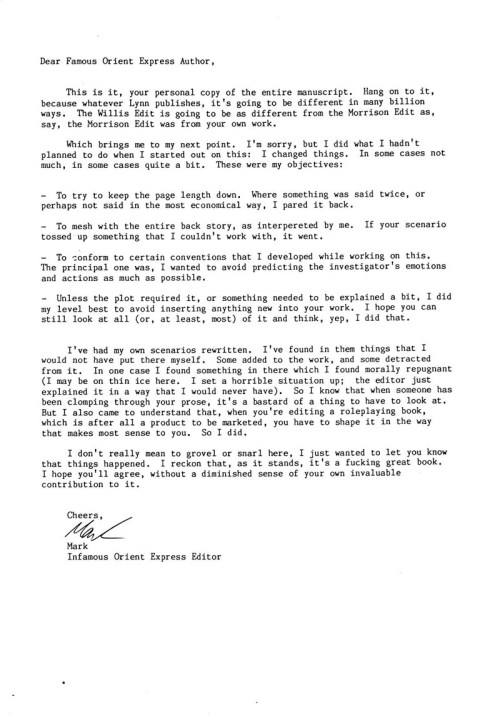
Dean from Cthulhu Reborn was recently going through a cache of old documents handed to him by Horror on the Orient Express writer Geoff Gillan, and found the following epistle. It is addressed “Dear Famous Orient Express Author” and signed “Infamous Orient Express Editor”.

I had forgotten all about this. It’s the form letter I included when I sent out the 8 numbered editions of the typescript manuscript for the original campaign. This was the version before it left Australia and went to Lynn for editing. I donated my copy of the ms. a while back to Paul of Cthulhu for the archives at Innsmouth House, aka the home of Yog-Sothoth.com.

Here is Dean’s scan and typescript of the letter. It’s not quite a Letter of Note, but it was cool to see this again after 20+ years. Warning, it contains a Bad Word.

HotOE-Editor-letter

Letter to the authors, 1991.

Dear Famous Orient Express Author,

This is it, your personal copy of the entire manuscript. Hang on to it, because whatever Lynn publishes, it's going to be different in many billion ways. The Willis Edit is going to be as different from the Morrison Edit as, say, the Morrison Edit was from your own work.

Which brings me to my next point. I'm sorry, but I did what I hadn't planned to do when I started out on this: I changed things. In some cases not much, in some cases quite a bit. These were my objectives:

  • To try to keep the page length down. Where something was said twice, or perhaps not said in the most economical way, I pared it back.
  • To mesh with the entire back story, as interpereted by me. If your scenario tossed up something that I couldn't work with, it went.
  • To conform to certain conventions that I developed while working on this. The principal one was, I wanted to avoid predicting the investigator's emotions and actions as much as possible.
  • Unless the plot required it, or something needed to be explained a bit, I did my level best to avoid inserting anything new into your work. I hope you can still look at all (or, at least, most) of it and think, yep, I did that.

    I've had my own scenarios rewritten. I've found in them things that I would not have put there myself. Some added to the work, and some detracted from it. In one case I found something in there which I found morally repugnant (I may be on thin ice here. I set a horrible situation up; the editor just explained it in a way that I would never have). So I know that when someone has been clomping through your prose, it's a bastard of a thing to have to look at. But I also came to understand that, when you're editing a roleplaying book, which is after all a product to be marketed, you have to shape it in the way that makes most sense to you. So I did.

    I don't really mean to grovel or snarl here, I just wanted to let you know that things happened. I reckon that, as it stands, it's a fucking great book. I hope you'll agree, without a diminished sense of your own invaluable contribution to it.

    Cheers,

(signed)

    Mark
    Infamous Orient Express Editor

There it is, 1991 Morrison trying to placate the authors. You’d have to ask them if it worked or not. I’ll write more about editing then and now in a future post.

And, as for the “morally repugnant” scenario, I think I know the one I was referring to, and I ran it again recently without thinking twice about the content. 1991 Morrison was so sensitive. Looking at it again, I think the editor really did just come out and say what I’d put in there psychologically, and in doing so made the scenario more true. If you can’t stand the horror, stay out of the abattoir.

Thanks again to Dean from Cthulhu Reborn for dragging this missive out of the archives for me. He does splendid work, and has recently cooked up some super PDF versions of three of our scenarios from long ago, originally published on Shannon Appel’s Chaosium Digest:

Free Call of Cthulhu  PDF scenarios by Gillan, Love & Morrison, from Cthulhu Reborn

Call of Cthulhu scenarios in PDF by Love, Gillan & Morrison [from Cthulhu Reborn]

The PDFs are all free, so go and download ’em!

 Dean has just put out his first full commercial release. Mutable Deceptions Volume 1: Jazz Age Newspapers is a nifty PDF generator for creating your own 1920s and 1930s style newspaper handouts for Call of Cthulhu or other games. I’m using it to make additional newspaper articles for the current Horror on the Orient Express playtest. It’s swanky. And, at just US $5.95, a bargain.
Mutable Deceptions Volume 1: Jazz Age Newspapers

Mutable Deceptions Volume 1: Jazz Age Newspapers

5 Comments

Filed under Writing

St Valentine’s Train

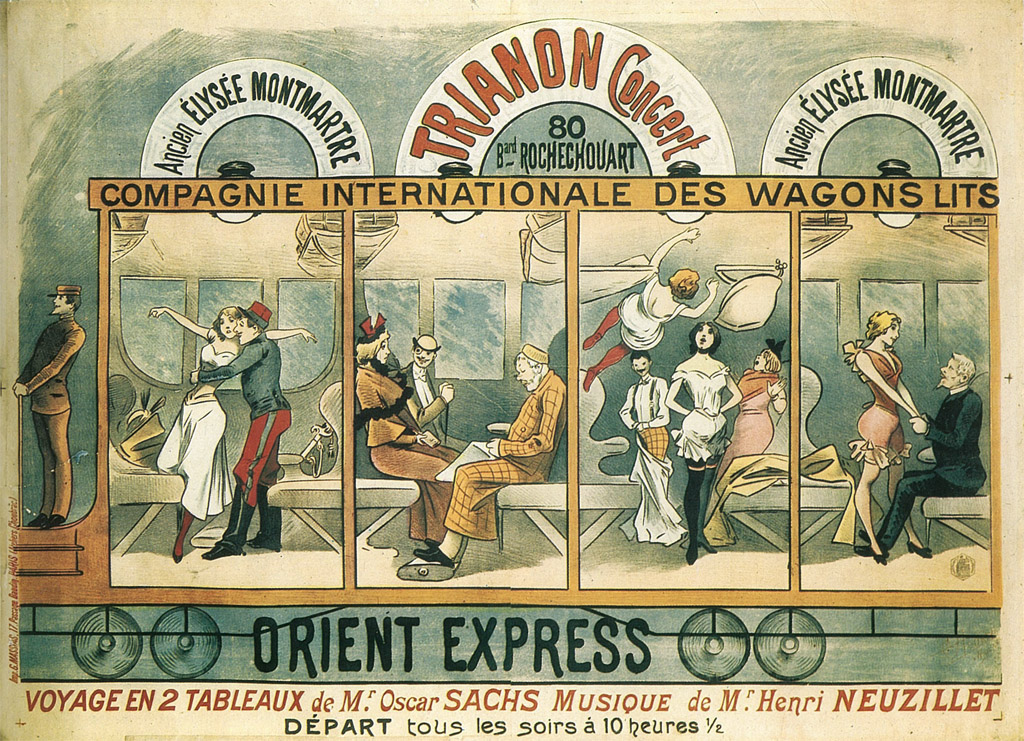
This poster depicts what people suspected  went on in the Orient Express in the Victorian era.

What Victorians suspected happened on board the Orient Express.

The Lovecraftian canon does not look kindly upon Romance.  Few characters have any kind of love life, and female characters such as Lavinia Whately in The Dunwich Horror and Asenath Waite in The Thing on the Doorstep meet horrible ends – although it can be argued that Asenath was not, mentally speaking, female. The case for Romance is slightly more cheering when we turn to the monstrous. The white ape-queen of Arthur Jermyn and the Deep One princess of The Shadow over Innsmouth both get their man and survive to return home. 

This lack could be because the knowledge of the insignificance of humankind in the face of cosmic horror blunts the romantic impulse, or it could proceed from Lovecraft’s life experience. Sonia Greene loved her man and admired his vision but she could not get work in Providence and he could not live in New York. The marriage lasted two years.

Fortunately Romance blossoms when we turn to the Orient Express. The mere idea of sleeping compartments , of strangers of the opposite sex reposing in close proximity, provided much delighted scandal in the staid Victorian Age. Colonel Mann was an early partner of Orient Express visionary, George Nagelmackers. Mann had a less than respectable private life, but this did not stop him attacking the rival Pullman carriages on moral grounds. The Pullman carriages had an open interior rather than enclosed compartments. Mann profitably harped on the immorality of being in mixed company when in night attire. As  E.H. Cookridge notes dryly in Orient Express, ‘No one seems to have studied the interior layout of Mann’s boudoir cars with sufficient attention to realize that his private cubicles for two persons were infinitely more improper…’.
The popular view of the Orient Express as a hotbed of romance and scandal is vividly expressed in the image above, a poster for a nineteenth century French farce. We suspect that the clergyman in the compartment on the far right is dallying with a lady who might not be his wife.

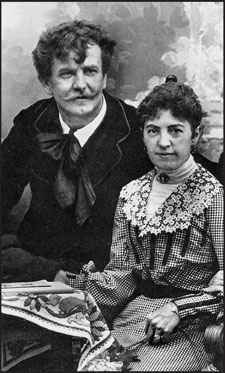
In Horror on the Orient Express we have allowed for some love amid the madness.  Christian and Veronique Lorien are the epitome of a committed and loving couple. The star-crossed lovers in Venice may yet prevail with investigator assistance. The divine soprano Caterina Cavorollo sings in the salon car of the Orient Express, in a pure expression of love that speaks to the soul of all who hear her, even cloth-eared investigators who would rather face the Black Goat of the Woods than listen to opera.

Christian & Veronique Lorien

Christian & Veronique Lorien

Romance endures, sometimes for a price. For $3200 AUD per person, a couple can travel from Paris to Venice on today’s loving re-creation of the  Simplon-Orient Express. The overnight journey is a romantic gesture par excellence. Mark and I could not afford that on our 2010 trip. We booked on the regular  service but we didn’t get on that either. There was a strike and the train was cancelled. We had an exceedingly unromantic overnight bus trip to Milan instead. The Orient Express branded carpet at  St Lucia station in Venice was as close as we got.

Rolling out the red carpet

Rolling out the red carpet

2 Comments

Filed under Library Use

Dance of the dead

Dead Can Dance

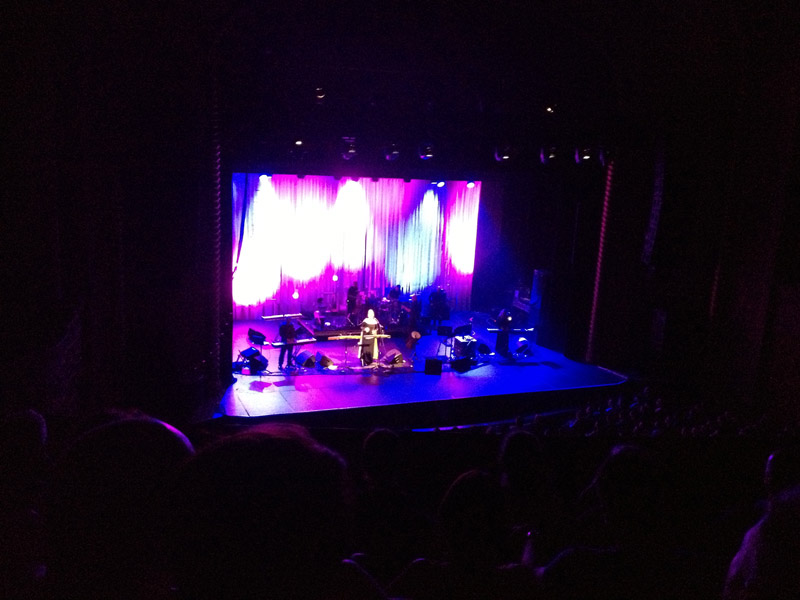
Dead Can Dance (Palais Theatre, Melbourne 2013)

Last night Penny and I fulfilled a 20 year musical ambition by finally getting to see the remarkable band Dead Can Dance play here in Melbourne. They’re a musical duo, but I have always preferred the ethereal vocal tracks sung by Lisa Gerrard in a language of her own design to the earnest ambient folk songs of Brendan Perry. Hearing Gerrard sing “Now We Are Free” from Gladiator was one of the highlights of my gig-going life; I think the hairs on the back of my neck are still up.

Dead Can Dance have many gothic ambient tracks suitable for roleplaying game sessions. The right music is the secret of my success as a Keeper; it lifts a session well above the ordinary, and players admire any sync between the story and the soundtrack as evidence of your genius (it is in fact luck, although the right playlist helps). Gerrard’s soaring emotional track “Sanvean” is perfect for, say, when the investigators must break the hard wintry ground of Europe 1923 to bury one of their own. (Not that we’re saying that is a certainty. Did we mention we are adding a new Investigator Survival Guide?)

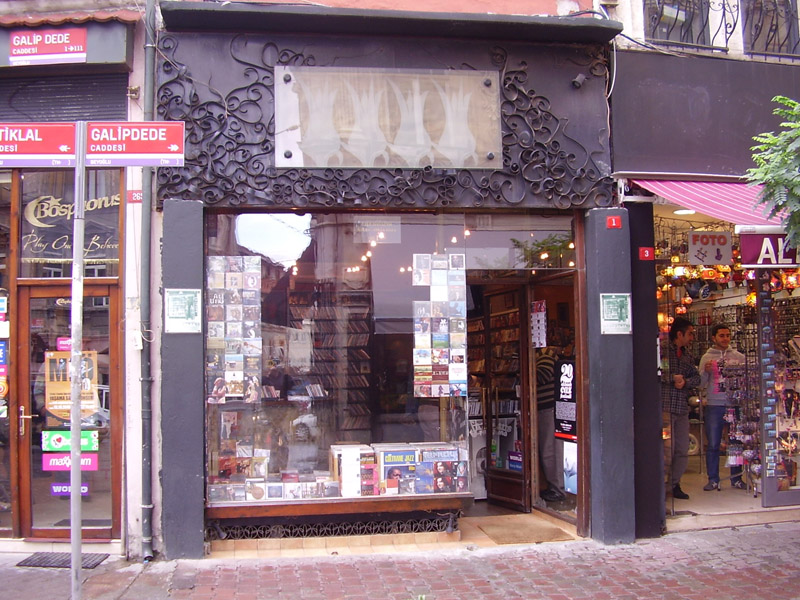
I’m always on the lookout for ambient music for writing and for gaming, so when we were in Istanbul I was keen to get some Turkish music. Istanbul Encounter from Lonely Planet recommended Lale Plak up in the Beyoğlu shopping district; we were heading up there anyway in search of a painting of tortoises. The shop was crammed with jazz, ambient and more, and there was a cat asleep in a box full of vinyl.

Lale Plak

Lale Plak music store (Istanbul, 2010)

The friendly owner suggested Mercan Dede, a project by Turkish-born DJ Arkin Allen who embellishes his electronic ambience with traditional instruments and Sufi lyrics. It takes me straight back to the Bosporous whenever I listen to it, and I look forwards to using some of the tunes in the playtest when the investigators reach the Golden Horn. Here’s a sample from Breath (2007). Imagine the investigators plunging into the Grand Bazaar. Are they being followed? Surely not…

Horror on the Orient Express already has its own soundtrack, composed by Alex Otterlei. He is working with Chaosium for a new special issue release to coincide with the boxed set. You can hear samples from the current version on CD Baby and iTunes. It’s an honour to work on such a project with so many fantastic creative people bringing our train to life.

Horror on the Orient Express soundtrack

Leave a comment

Filed under Music

Playtest of Cthulhu

Behind the Keeper's screen

Behind the Keeper’s screen of the 2013 play test for the Lausanne scenario.

Playtesting is key for the revised edition of Horror on the Orient Express.

The authors writing the new sections are playtesting their own work before submission. Oscar Rios has a group of New York irregulars he can call on, and afterwards he discusses plot refinements with them via Facebook. Their ideas for the Invictus scenario final draft were particularly gruesome. Geoff Gillan plays with his original gaming group of 20 years, but these days via Skype; he can rely on them to upend any scenario he puts in front of them (I believe one of the Gaslight characters got arrested). They have just finished playing the new Dark Ages scenario, and four of their characters will appear as the pre-gen characters in the final book; a pleasing collaboration.

Meanwhile, I am playing through the entire campaign with four friends who have put aside family obligations to meet weekly. It is an incredibly focused group, we sit down at 8pm and they give the plot their full attention, with no out of character jokes or asides. Having been away from Call of Cthulhu for years except for the occasional Christmas game, I am addicted to it all over again. I am taking a vicarious thrill in cutting apart and using all of the handouts and props for the 1991 edition, exactly as Lynn intended. The hell with the Ebay value, they were printed for use! In the photo above you can see the Sedefkar Scroll. Lynn wrote that a leather tie would give it an authentic air, but as a vegetarian I’ve settled for a piece of string.

The players include a historian, a writer and a photographer, so the extra ideas they bring to the table are remarkable, especially in the area of research ideas. Many of these new avenues and clues will make it into the book. It is clear to me what they find interesting and what they don’t pick up on at all, and I am rewriting the early chapters to provide more motivation. At the end of each session I pour another coffee and write up detailed notes, usually three pages of bullet points per night.

The biggest change is in the way that the information is structured. The 1991 edition assumes in many parts a certain dramatic flow, but any investigator decision can change that. Unfortunately the scenarios are not adequately arranged to allow for such variation, and key locations are not described at all. One chapter assumes the players will meet and talk with an NPC; instead, they decided to lure him out and break into his house, which was not covered in full. This is my first time running the final printed campaign (the version I ran in 1990 was prior to final editorial), so with the intervening 20 years I am able to approach it as an end user.

There is lots to do, but we are having great fun in the process. Actually, fun is the enemy. We are on a tight schedule to get the entire campaign played in time, and I have to curb my instincts. Hence the note on the inside of my Keeper’s screen: GO FASTER. I am perfecting my methods for quick play, which I’ll share in a future post (there are a couple that are not quite working yet, due to my own lack of discipline!).

Meanwhile, we have a group in the UK who are playing through the 1991 campaign, so I am sharing notes with the Keeper. Many of our discoveries are the same, so I hope that you all will find that the new edition is much easier to run. And, you won’t have to do it on a deadline. Go slower!

3 Comments

Filed under Playtesting

Lynn Willis: Steadfast Editor & Dreamer

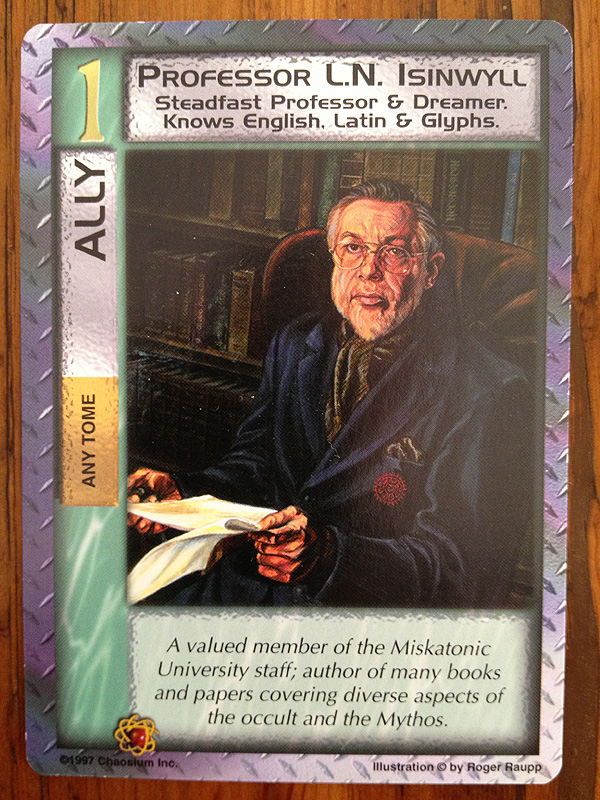
Professor L.N. Isinwyll

It was always our intention to dedicate this new edition of Horror on the Orient Express to Lynn Willis. The idea for the project was Lynn’s: in the late 1980s Christian Lehmann and I pitched a Continental European Sourcebook for the 1920s, and Lynn responded that he would rather see an adventure set on the Orient Express. We took the challenge, recruiting others to help us. Lynn was a responsive, supportive and insightful editor, and under his vision it grew into a deluxe boxed set.

Lynn infused our first draft manuscript with history and humanity, evoking uncertain times lived on the precipice of a troubled past. Europe of the 1920s and the luxury of the world’s greatest train came alive in his edits, and as authors we were honoured by the enhancements he made. All of the ideas for the deluxe handouts and inclusions were his, and the art direction was flawless.

Lynn retired from Chaosium in 2008 and had been in poor health in recent times, but he has been in our thoughts every day of late as we rediscover the scholarship and wit in his prose. Only Lynn could add as an aside that a deceased archaeologist, when handed a book to assist in translation, would “pause to admire the concision” before getting on with the task at hand.

We’ll still make that dedication, but sadly Lynn will not see it. Charlie emailed on Friday morning to say that Lynn’s struggle with illness was over at last.

His legacy is enormous. On his watch, Call of Cthulhu was first published and then aged through five editions steeped in research and concision. His 1984 collaboration with Larry Di Tillio Masks of Nyarlathotep remains his masterpiece, perhaps the greatest RPG campaign of all time. But beyond the books, Lynn answered every letter he received about the games he worked on, and inspired a generation of gamers with his unfailing encouragement and wisdom. He also mentored scores of artists and authors, myself included. As I write this, I can still hear his voice, with that tone of knowing amusement. He still makes me smile across the intervening years.

In Call of Cthulhu, investigators step up to the mark when heroes are required; we all hope we can do the same. One such hero was Lynn’s partner Marcia, who stood by him throughout. No biography of Lynn is complete without her. Cthulhu may be fiction, but love in this world is real.

Farewell, Lynn; may you lie dreaming. We’ll think of you every day as we guide your train home again. Here are some photos of happier times.

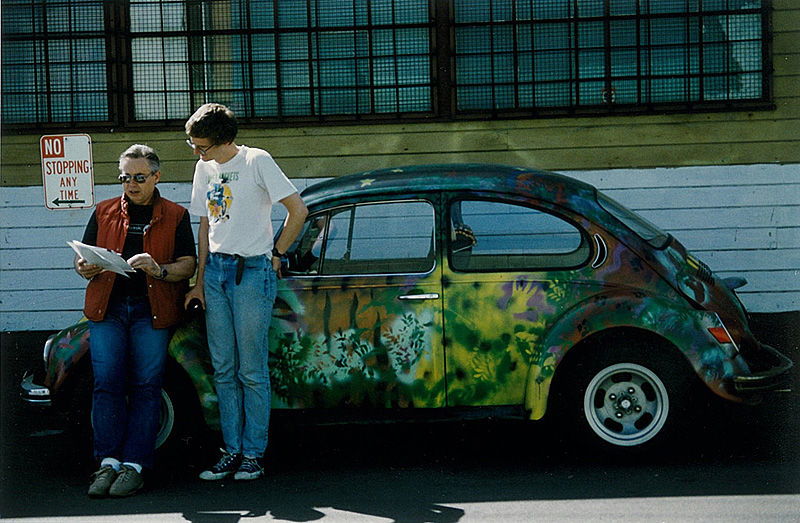
Lynn Willis and Mark Morrison outside Chaosium, 1991

Lynn Willis and Mark Morrison outside Chaosium, Oakland 1991.

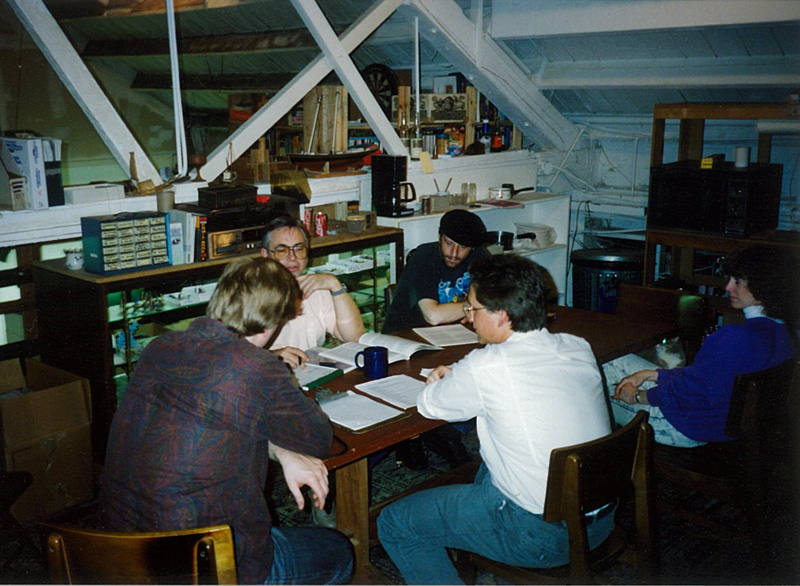
Great minds meeting: Scott David Aniolowski, Lynn Willis, Kevin A Ross, Keith Herber & Sharon Herber at Chaosium, 1990.

A meeting of great minds. Clockwise from left:  Scott David Aniolowski, Lynn Willis, Keith Herber, Sharon Herber and Kevin A Ross in the mezzanine library, meeting and gaming space at Chaosium, Oakland 1990.
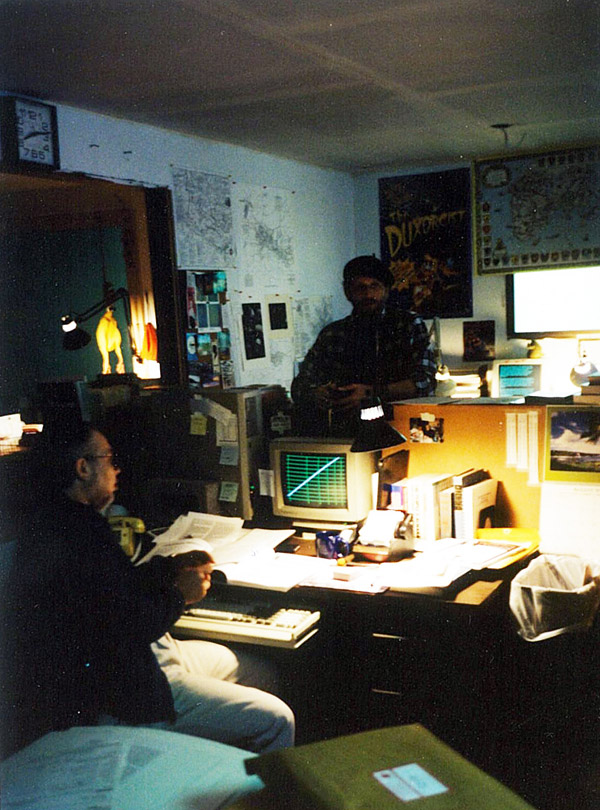
Lynn and Keith at their desks in the comforting gloom of Chaosium, Oakland 1990.

Lynn and Keith at their desks in the comforting gloom of Chaosium, Oakland 1990.

4 Comments

Filed under Chaosium

The trailer we wish we’d made

In starting our research we looked up YouTube to see what Orient Express footage was available.  Lo and behold we found quite a few trailers for Horror on the Orient Express. This one by MalleusCalixis uses borrowed music and footage and some great archival photos to perfectly sum up the mood of the campaign, so much so that Mark used it to open the first evening of playtesting. The players spontaneously applauded.
We loved the fact that this campaign that we published years ago has caused so many creative echoes and ripples. Thanks Malleus!

So turn down the lights, turn up the sound, and enjoy.

2 Comments

Filed under Playtesting